
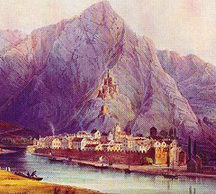
Les évidences de l'histoire Omis fière et turbulente peut être trouvé dans tous les coins de la Côte d'Omis. Ancienne ville d'Omis, Omis églises et forteresses Omis sont des rappels de pierres silencieuses de la force et la puissance des corsaires célèbres Omis.
Il ya plusieurs noms historiques, y compris Onaion (Oneon), Holm (Hum), Nestos, Oneum (Onaeum), Olmisi, Olmissium, Almivssium et Almissa. Les objets les plus anciens qui mentionnent la date Omis de l'époque grecque et romaine.
Au cours de la Omis Moyen Age était tristement célèbre pour ses corsaires (pirates) dont les navires apporté la célébrité à eux parce qu'ils ont été construits pour l'attaque et de retour rapide dans l'embouchure de la rivière Cetina, la protection de la ville contre l'invasion étrangère. A un voisin très tôt des Corsaires d'Omis, les montagnards de la Principauté Poljica, sont devenus leurs alliés, leur permettant de harceler le commerce maritime sans crainte d'une attaque soudaine par voie terrestre.
En dépit de diverses alliances contre les pirates Omiš, y compris le pape, Venise, Split et Dubrovnik, il n'était pas jusqu'en 1444 que Venise a réussi à s'emparer de la ville vieux pirate. C'est arrivé à cause de la force de l'approche turque qui a fait le chemin ambre dangereux, presque impossible. Cela signifiait aussi le déclin de la puissance des pirates. Privés de leur proie, ils ont perdu leur force et la raison d'être. Le danger des Turcs est devenu de plus en plus grave. Pourtant, malgré le fait que ils ont conquis la proximité hinterland, Omiš n'avait jamais tombé entre leurs mains.
En raison de menaces permanentes de la terre, ainsi que de la mer, la forteresse existante "Starigrad" (Fortica), avec équipage militaire en elle, et en soutenant tour "Visec» dans Cetina Canyon de la rivière, ne suffisait pas pour la ville de la défense, de sorte , déjà au Moyen-Age, Omis était ceinte de murailles fortifiées, avec des bastions du côté des terres de l'Est, et la forteresse "Peovica" (Mirabella) sur le côté nord-ouest.
Dans le quartier Priko, sur la rive droite de la rivière Cetina, est l'édifice le plus important de la ville, l'église romane de pré Saint-Pierre du 10ème siècle. Cet édifice à une seule nef, avec une coupole et l'abside, a été utilisé au 18ème siècle comme un séminaire glagolitique pour les prêtres novices.
*
Découvrez plus d'informations sur l'histoire de Omiš: